
From Remnants to Products: How New Creations Emerge from Hammock Fabric Scraps
Part 1 of our series: An honest look at our sustainability decisions
Two containers. That's how much fabric waste has accumulated from the production of our hammocks in the last two years. Instead of discarding this waste or sending it for recycling, we decided to reuse it directly – and from it, an entire part of our product portfolio was born.
From Waste Material to Standalone Product
It all started with the question: What actually happens to the fabric left over when cutting our hammocks?
For us, the answer wasn't "throw away" or "make decorations," but rather: develop new, functional products. It was important to us that the resulting products not only look good but also serve a real purpose – functionality is our top priority, even with upcycling.
Three examples show what this looks like in practice:
The Moon Strap Pouch deliberately comes in unique colors, meaning random color combinations. This is not a compromise, but a conscious decision: this way, virtually every fabric scrap can be used without us having to sort by color beforehand. Generally, unique products make a lot of sense for us in upcycling – they allow us to utilize scraps quickly and easily.
You can find more information about our unique products here.

Our Moon Strap Pouches
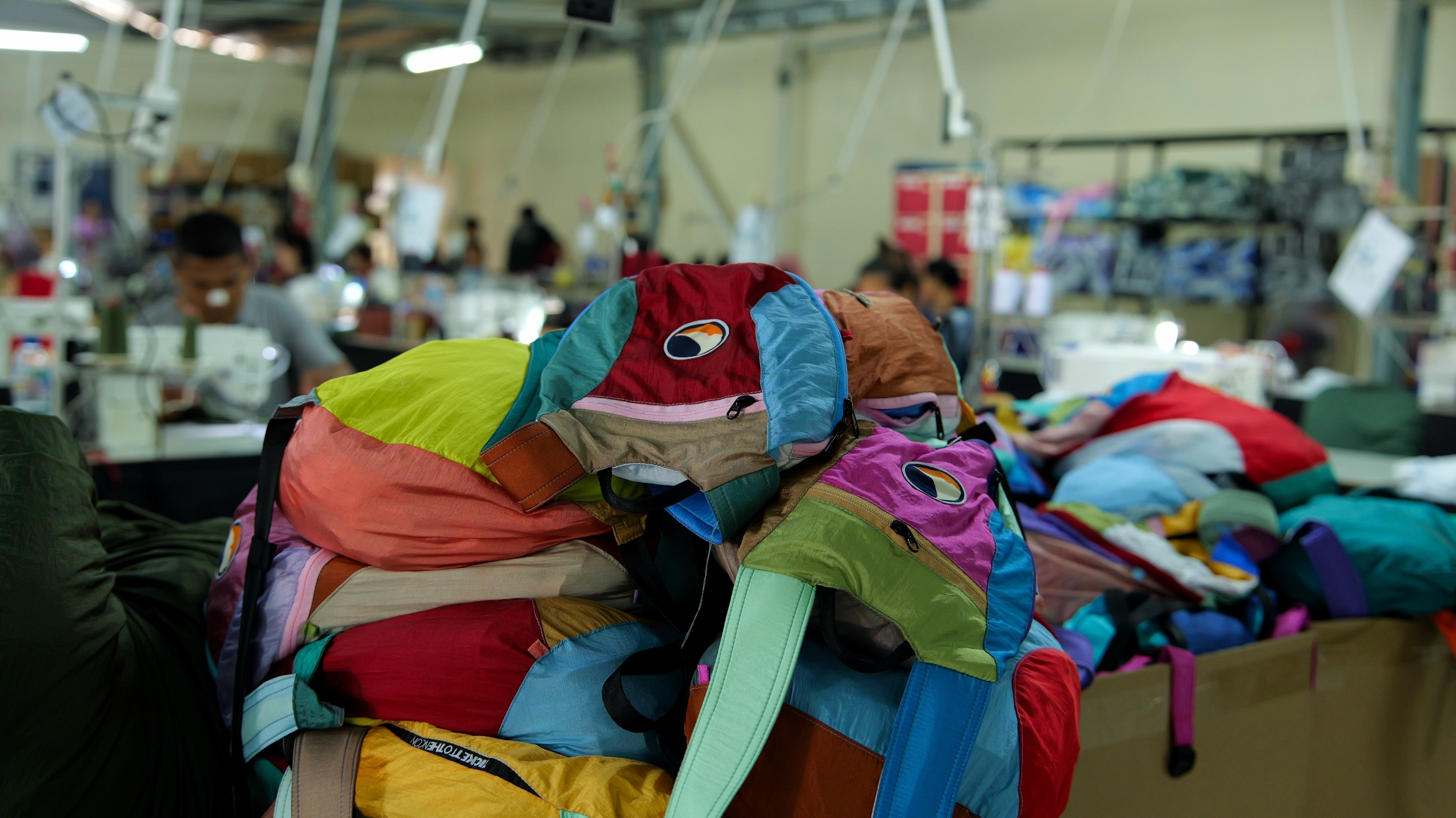
Our Bag Collection is specifically adapted to the existing stock of scrap material. Instead of planning first and then ordering material, we look at what scrap material is available and develop the bags accordingly.

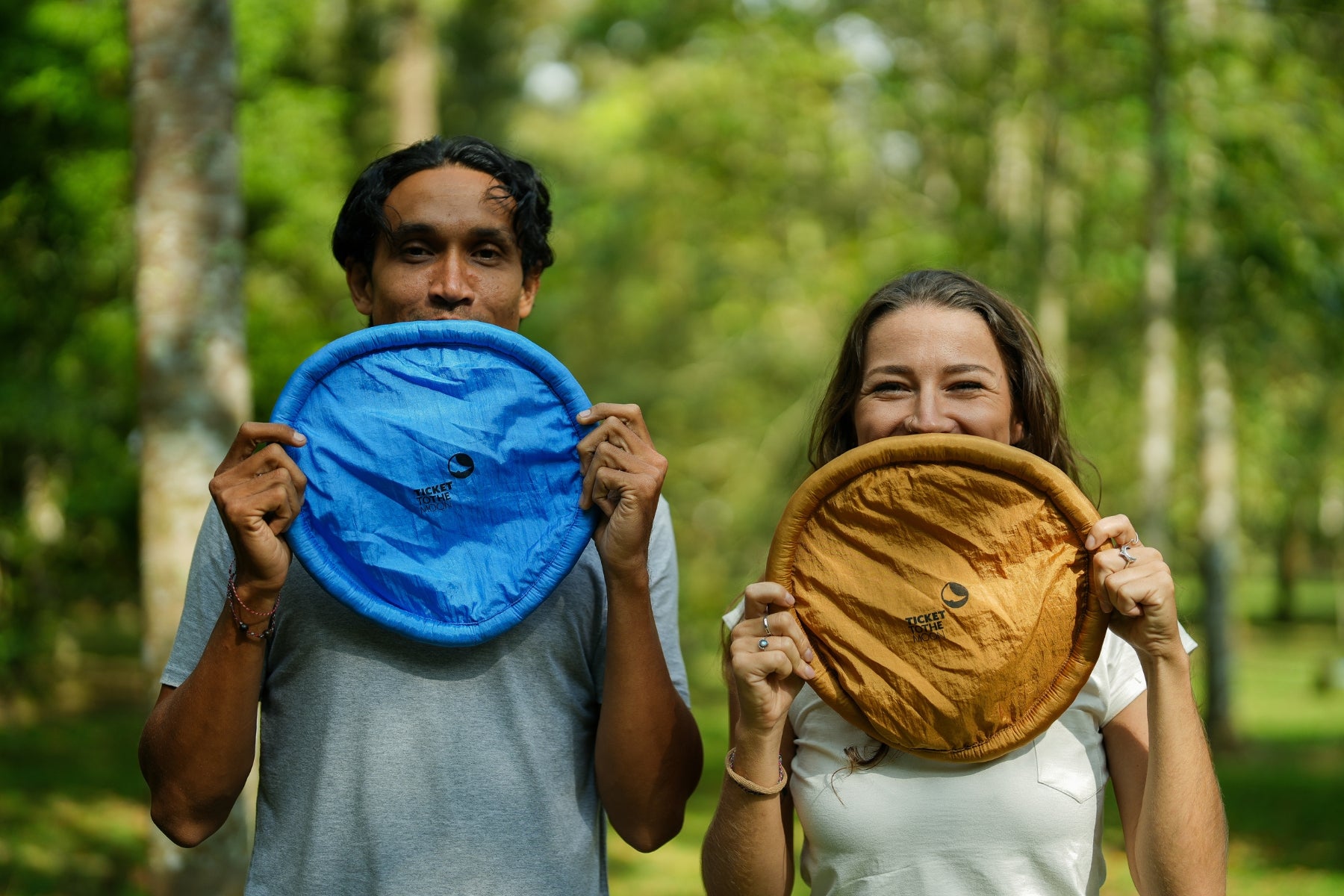
The Moon Disc, our frisbee, goes one step further: even the finest fabric scraps, which are far too small for larger products, are processed into the edge of the disc. This way, even the last, smallest remnant is still put to good use.

How Big is the Problem in the Textile Industry Really?
To understand why this is important to us, it's worth taking a look at the scale of the issue. Globally, around 92 million tons of textile waste are generated annually – a large part of which ends up in landfills or is incinerated.¹ A significant portion of this is already generated during production itself – for example, as offcuts or unsold goods.²
At the same time, global textile production continues to grow: worldwide fiber production has more than doubled since 2000, while less than one percent of the global fiber market actually comes from textile-to-textile recycling.³
This is precisely where we come in. Against this background, it becomes clear why even the comparatively small amount of two containers counts for a company of our size – and why we are convinced that every approach to meaningfully reuse production waste makes a difference.
Why Upcycling is Different from Recycling
The terms upcycling and recycling are often used synonymously, but they refer to very different processes. In classic recycling, material is broken down into its components and industrially reprocessed – however, quality is often lost, which is then referred to as downcycling.⁴ In upcycling, on the other hand, the original form of the material is largely retained; it is creatively upgraded rather than dismantled.
This is also why upcycling is considered particularly resource-efficient: the complex, energy-intensive process of dismantling and reprocessing is completely eliminated.⁵ This is exactly our experience – the more fabric that is actually reused as fabric, instead of being dismantled or incinerated, the better the balance. In the industry, fabric scraps are often only used as filling material, which is essentially already a form of downcycling.⁵ We deliberately go a step further and process our scraps as a full-fledged flat material into standalone products.
The Honest Part: Effort Instead of Efficiency
What is often overlooked in all of this: This process is complex. Our high upcycling rate is only possible because we cut a lot manually – every piece of fabric scrap is different; there are no standardized cutting patterns like with new material. This takes time, and it's difficult to calculate exactly how much material and resources we actually save as a result, because we don't weigh and balance every piece. The contribution margin for these products is accordingly not as good as for products made from new material.
Nevertheless, we follow through with it. Because our conviction is simple: It is always better to reuse fabric as fabric than to send it for recycling or even dispose of it – even if it takes more work and is less profitable.

What's Next
In the next posts of this series, we will show more about what sustainability means to us – from our path to less packaging waste to the insulation of our underquilts made from recycled PET bottles.
Sources
- UN Environment Programme (UNEP): Sustainable fashion to take centre stage on Zero Waste Day ↩, accessed on 10.07.2026
- European Environment Agency (EEA): Management of used and waste textiles in Europe's circular economy ↩, accessed on 10.07.2026
- Textile Exchange: Materials Market Report 2025 ↩, accessed on 10.07.2026
- Verbraucherzentrale.de: What is upcycling? And when does it make sense? ↩, accessed on 10.07.2026
- MOOT: Upcycling: Redesign instead of throwing away ↩, accessed on 10.07.2026



Leave a comment
This site is protected by hCaptcha and the hCaptcha Privacy Policy and Terms of Service apply.